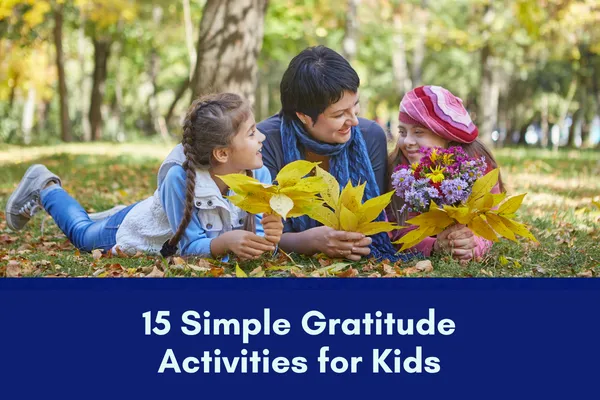
15 Simple Gratitude Activities for Kids
* Sometimes I include affiliate links in my blog posts. That simply means I may earn a small commission (at no extra cost to you). I only recommend what I genuinely use or would share with a friend.
Teaching children gratitude doesn’t have to involve long lectures or complicated routines.
In fact, the best gratitude lessons often happen through simple, everyday activities. When kids practice gratitude regularly, they begin to notice the people, experiences, and small moments that make life meaningful.
Over time, these small practices can shape how children respond to challenges in their lives and in their relationships.
Obviously, your children aren't going to feel grateful all the time, no matter how intentional you are about encouraging a gratitude mindset. They're human after all! And since you're human too, they likely won't see a gratitude mindset 100% of the time. But you can definitely help them develop a positive habit of noticing the good around them that they can carry with them into the rest of their lives.
Why gratitude activities help children
Children learn best through experience. When gratitude becomes something kids do, rather than just something they are told to feel, it becomes easier for them to understand and practice.
Gratitude activities will help kids:
notice everyday blessings
develop empathy for others
reflect on positive experiences
build stronger family connections
Each act of gratitude can gradually change how a child sees their world.
Over time, these experiences with gratitude help kids develop the kind of perspective that supports emotional resilience and long-term happiness.
Here are 15 simple gratitude activities for kids that families can start using today.
1. Start a gratitude jar
Place a gratitude jar [paid link] somewhere in your home along with small pieces of paper.
Invite your kiddos to write down something they’re thankful for each day and place it in the jar. At the end of each week or month, spend time reading them together.
Kids often enjoy seeing how many moments of gratitude their family has experienced.
2. Gratitude walk
Take a short walk and challenge your children to notice things they’re thankful for in nature — things like:
sunshine
birds
flowers
fresh air
This activity helps children slow down and observe the world around them. Older children will be able to get more specific, describing the things they are happy to see in detail.
3. Thank-you notes
Encourage kids to write short thank-you notes to people they appreciate, such as teachers, grandparents, neighbours, coaches, siblings, and friends.
Expressing gratitude directly helps children build stronger relationships— and a thank you note is a great way to make someone's day!
4. The three good things game
At the end of the day, ask your child to name three good things that happened today. They don’t need to be big events. Even small things can be significant to kids, even if they are very different from what you see as important.
Years ago, we travelled across Canada in an RV. Every day, we met interesting people and saw amazing things, but when we wrote in our gratidude journals at the end of the day, my kids wrote that they were most grateful for things like McDonald's french fries and kraft dinner. Not quite was I was expecting, but they were thankful nonetheless.
Often, when kids reflect on what they are most thankful for at the end of the day, the most meaningful answers involve small moments like playing with a friend or enjoying a favorite meal.
5. Gratitude art
Invite kids to draw pictures of things they’re thankful for. Many younger children and creative kids of all ages especially enjoy expressing gratitude through art rather than writing.
These drawings can also become meaningful reminders of positive moments.
6. Gratitude scavenger hunt
Create a list of things for kids to find around the house or neighborhood that represent gratitude. Examples might include:
something that makes you smile
something that helps you learn
something that makes you feel safe
Kids love turning gratitude into a game.
7. Appreciation circle
During family time, take turns sharing something you appreciate about each family member.
This activity helps children recognize the positive qualities in others. It can also be a great reminder to be kind to others.
8. Gratitude journal
Starting a family gratitude journal is a great way to model gratitude and connect with your kids. And you might find older kiddos will want to keep a simple gratitude journal on their own.
Each day they can write one or two things they appreciate. This habit helps children reflect on their experiences and build awareness of positive moments on a consistent basis.
9. Gratitude storytelling
Ask children to share a story about a time someone helped them or showed kindness.
These stories help kids recognize the impact others have on their lives. And who doesn't like listening to funny or heart-warming stories?
10. Helping others
Acts of kindness are one of the most powerful ways to develop gratitude. Encourage children to:
help a sibling
do chores around the house
donate toys they no longer use
volunteer in small ways
Serving others often helps children develop a deeper appreciation for what they have. It can also help kids be more aware of people who may be in need and consider ways they might be able to help.
11. Gratitude conversations at dinner
The dinner table is a natural place for gratitude discussions. You're already gathered together and sharing a meal often sparks conversation. Families can ask simple questions like, “What was something good that happened today?”
These conversations can become one of the easiest ways to build gratitude habits at home.
12. Gratitude photos
Encourage kids to take photos of things they are thankful for throughout the week.
At the end of the week, review the photos together and talk about them. Thinking of what they'll snap throughout the day will build their awareness of the good around them.
13. Gratitude calendar
Create a monthly calendar where kids write one thing they’re thankful for each day.
Watching the list grow can be encouraging for children — and when it's in full view for everyone to see, children and parents will be able to motivate each other to look for the good in their lives every day.
14. Gratitude for challenges
Sometimes gratitude involves noticing growth that comes from difficult situations. Ask children questions like, “What did you learn today?” or “What helped you during that challenge?”
Discussions like this will help your children develop resilience and perspective.
15. Bedtime gratitude
Before bedtime, ask your child to think about one moment from the day that made them feel thankful.
Ending the day this way can create a peaceful routine and help children reflect on positive experiences. We started building a gratitude habit when our kids were little, by thanking God in prayer at the end of each day.
We still enjoy this beautiful time of reflection, connection, and discussion whenever our young adult children are home.
Building gratitude as a family habit
It doesn't matter how many gratitude activities you incorporate into your day. Just try your best to be consistent.
Even practicing one or two of these activities regularly can help children develop the habit of noticing the good around them.
Over time, gratitude becomes part of the emotional culture of the home. And those small habits can influence how kids respond to challenges in relationships and everyday life.
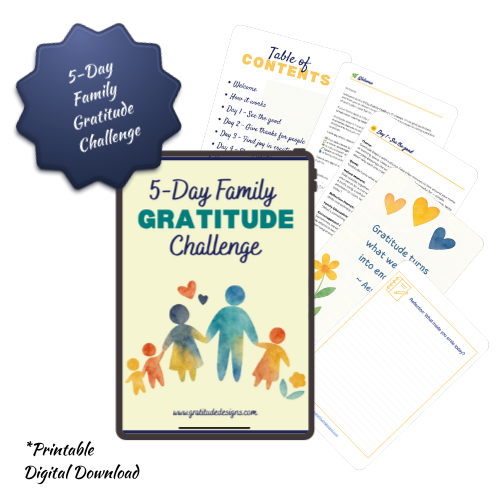
Need some inspiration? This 5-day family gratitude challenge is a gentle, doable way to get started.