The Science of Gratitude: What Research Says About Raising Grateful Kids
* Sometimes I include affiliate links in my blog posts. That simply means I may earn a small commission (at no extra cost to you). I only recommend what I genuinely use or would share with a friend.
Many parents hope their children will grow up to be kind, resilient, and appreciative. We want our kids to recognize the good in their lives, treat others with kindness, and develop the kind of perspective that helps them navigate both joyful and difficult moments.
Gratitude plays a powerful role in shaping these qualities.
For years, parents and educators have believed that gratitude helps build strong character in children. In recent decades, psychologists have begun studying gratitude more closely — and the results are fascinating.
A growing body of research suggests that gratitude can influence everything from children’s happiness and emotional resilience to their relationships with others. In other words, gratitude isn’t just a nice idea. It’s a habit that can shape how children experience the world.
Let’s take a look at what the science says.
Why researchers began studying gratitude
For much of the 20th century, psychology focused primarily on problems like anxiety, depression, and behavioral challenges. But in the late 1990s and early 2000s, a new field called positive psychology began exploring what helps people thrive. Researchers started asking questions like:
What helps people feel happier and more fulfilled?
What strengthens relationships?
What helps people recover from setbacks?
Gratitude quickly became one of the most studied topics in this field.
Psychologists discovered that people who regularly practice gratitude tend to experience greater life satisfaction, stronger relationships, improved emotional well-being, and increased optimism.
These findings raised an interesting question: Could gratitude also play an important role in children’s development?
What research says about gratitude and children
Over the past two decades, researchers have studied gratitude in children and adolescents. One of the foundational researchers in this area is psychologist Robert Emmons, whose work helped establish gratitude as an important contributor to well-being.
His early studies found that people who regularly reflected on things they were thankful for experienced higher levels of happiness and optimism. And more recent research has expanded on these findings.
Studies in the past few years continue to show that gratitude is linked with:
increased happiness in children
stronger friendships and social connections
greater emotional resilience
more positive behavior toward others
Researchers studying gratitude interventions in children have found that simple practices — like gratitude journaling or reflecting on positive experiences — can help improve children’s overall well-being.
These habits help children focus on the positive aspects of their lives without ignoring challenges.
Gratitude and emotional resilience
One of the most interesting areas of research involves gratitude and resilience. Resilience is the ability to recover from setbacks and adapt to challenges.
Children inevitably face difficulties like friendship struggles, school challenges, or disappointment when things don’t go as planned. Gratitude appears to help kids maintain perspective during these moments.
Research suggests that children who practice gratitude regularly are more likely to:
recognize positive experiences even on difficult days
recover more quickly from disappointments
maintain a sense of optimism about the future
Rather than ignoring problems, gratitude helps children see that difficult moments are only one part of their story.
Gratitude and relationships
Another important benefit of gratitude involves relationships. Children who regularly express gratitude tend to develop stronger connections with others. Researchers have found that gratitude encourages prosocial behavior, which includes actions like helping others, sharing, showing kindness, and expressing appreciation.
When children recognize the ways others contribute to their lives, they naturally develop empathy and appreciation, qualities which strengthen friendships and family relationships over time.
Simple practices like writing thank-you notes or sharing appreciation during family conversations can help children become more aware of the people who support them.
Gratitude and mental well-being
Recent studies also suggest that gratitude may support children's mental health. Researchers studying gratitude practices in young people have found that reflecting on positive experiences can help reduce negative emotions and increase overall life satisfaction.
Gratitude helps direct kids’ attention away from constant comparison and dissatisfaction, toward appreciation. This shift in perspective can be especially valuable in a world where our kids are surrounded by social media, advertising, and cultural messages that emphasize what people lack rather than what they have.
By helping children notice everyday blessings, gratitude encourages a healthier mindset.
How gratitude shapes perspective
Perhaps the most powerful impact of gratitude is the way it shapes a child's perspective. Kids naturally focus on their immediate experiences. When something feels unfair or disappointing, it can quickly dominate their attention.
Gratitude gently widens that perspective.
When children learn to notice positive moments, supportive relationships, and everyday comforts, they begin to develop a more balanced view of life.
Over time, this mindset helps children develop qualities like appreciation, empathy, optimism, and resilience. These characteristics influence how children respond to challenges, helping them think positively about opportunities and relationships.
How parents can help cultivate gratitude
The good news is kids can learn and practice gratitude even if it doesn't come naturally. Parents don’t need complicated routines or special programs to encourage gratitude at home. Often the most effective practices are very simple.
Families can nurture gratitude through small habits such as:
asking children about something good that happened during the day
encouraging children to thank people who help them
noticing acts of kindness together
Activities and conversations like these help children build awareness of the good things in their lives. Over time, these small practices can become meaningful family traditions.
Gratitude doesn’t require long journaling sessions or elaborate routines. One of the most encouraging findings from gratitude research is that even small practices can make a difference. Sometimes it simply begins with a thoughtful question, a shared reflection, or a moment of appreciation during the day.
When these small moments happen regularly, children begin to develop the habit of noticing what is good, meaningful, and valuable in their lives.
That habit can shape their perspective for years to come.
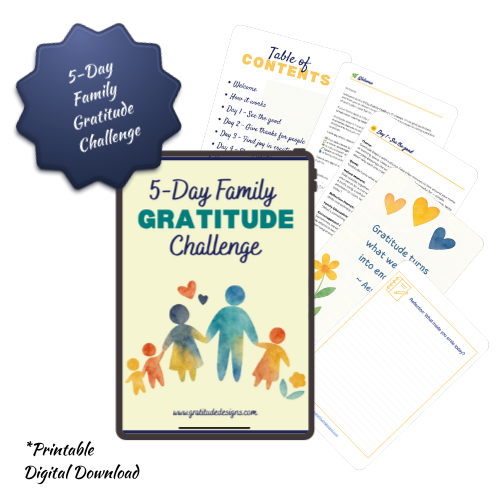
Looking for ways to build gratitude into your family routine? This free 5-day family gratitude challenge is a gentle, doable way to get started.