A Week of Gratitude Prompts for Families
* Sometimes I include affiliate links in my blog posts. That simply means I may earn a small commission (at no extra cost to you). I only recommend what I genuinely use or would share with a friend.
Family life is busy!
That means meaningful conversations don’t always happen automatically. Between school, work, activities, and everyday responsibilities, it’s easy for families to go from one activity to the next without taking time to reflect.
That’s one reason gratitude prompts can be so helpful.
A simple question at the right moment can help children (and parents) pause, reflect, and notice the good things in their lives — even on ordinary days.
The goal isn’t to create pressure for children to always feel thankful. We're not looking to instill toxic positivity in our kids. Instead, these prompts help children develop the habit of looking for moments of appreciation, which gradually shapes their perspective.
If you’re looking for a simple way to begin, here is a week of gratitude prompts your family can try together. You can write the answers down in a family gratitude journal or simply make time to chat about them together.
Why gratitude prompts work for families
Children don’t always know how to express gratitude on their own.
Prompts give them language and guidance to reflect on their experiences. Over time, these small reflections help children learn to:
recognize kindness
appreciate everyday moments
reflect on positive experiences
develop emotional resilience
When practiced regularly, gratitude becomes something children begin to notice naturally throughout their day.
How to use these prompts
These questions can be used at any natural moments in family life, such as:
at the dinner table
during car rides
before bedtime
during family walks
while relaxing together in the evening
You don’t need to ask every question every day. Even one simple conversation can help children begin to reflect on gratitude in meaningful ways.
7 Gratitude Prompts for the Week
Day 1: What made you smile today?
This question helps children notice small moments of joy.
The answer might be something simple like playing with a friend, enjoying a favorite meal, or hearing a funny joke. Helping children notice small positive moments builds awareness of everyday blessings.
When our kids were young, we took a 3-month RV trip to the Yukon in Canada. At the end of each day, we had the kids journal for a few minutes so we could remember our trip. Our gratitude question was what was your favorite part of the day?
I can't tell you how many times my daughter answered macaroni and cheese or french fries.
Not quite what I expected to be the big moments we would remember 10 years down the road, but it's what sparked joy for her in those moments.
It and it did instill a habit for us. We often ask each other what the best part of the day, weekend, or week was.
That habit, even with young adults, is the beginning of many wonderful conversations.
Day 2: Who helped you today?
Gratitude often grows when children recognize the people who support them.
Encourage children to think about someone who helped them during the day. This could be a teacher, a friend, a sibling, a coach, a parent, a cashier at the grocery store... anyone your child has had an interaction with.
Recognizing the people who care for us strengthens relationships and empathy.
Day 3: What is something you enjoy that you might forget to notice?
This seems like kind of a strange question, but kids often take everyday comforts for granted — we, as parents, are guilty too. This prompt helps us think about things like:
having a warm home
having food on our tables
having a car to get to activities
having a place to learn and grow
having siblings to love and spend time with
These reflections gently build appreciation for everyday blessings.
Day 4: What challenge helped you grow today?
Gratitude doesn’t only apply to easy moments and we definitely don't want our kids to think we only want them to talk about positive things that are happening. Sometimes challenges help children learn patience, perseverance, or problem-solving. This question encourages children to reflect on what they learned from difficult situations.
Day 5: What is something kind someone did for you today?
And the busy-ness of our lives, we might not remember good things that happened by the end of the day. So we may have to encourage kids to pause and reflect throughout the day to pinpoint kindness.
Try to find moments in the day when when someone showed kindness or care. Maybe a sibling did a chore for them, or a classmate sharpen their pencil. Maybe someone on their soccer team brought extra snacks.
Whatever the action, these reflections help children see the good in the people around them.
Day 6: What is something you are looking forward to?
Gratitude also includes anticipation and hope. When children think about something they’re excited about, it helps them develop a positive outlook. This could be something simple like:
playing with friends
spending time with family
a favorite activity later in the week
an upcoming trip
Day 7: What is one thing about your family you’re thankful for?
Family relationships provide many opportunities for gratitude. Encourage children to think about something they appreciate about a specific family member. The answers might surprise you — and often create meaningful conversations.
Making gratitude part of everyday family life
You don't have to be perfect in coming up with the right gratitude prompts, and you don't even have to sit down and discuss them every day. This is simply about creating moments where families pause and reflect together. Even a single question asked during the day can create space for meaningful conversation.
Over time, these small moments can shape how children view their experiences and relationships. As gratitude becomes a regular part of family life, children often begin noticing these moments on their own.
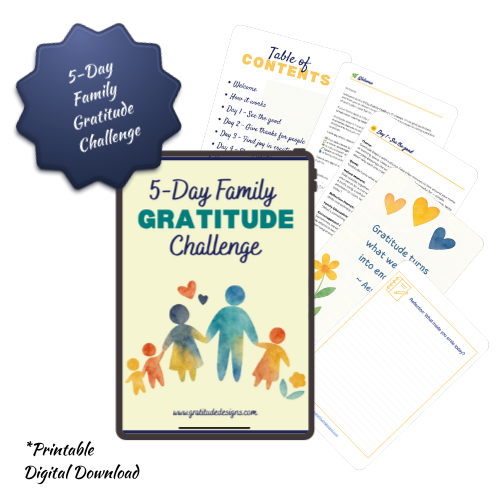
Looking for a gentle, doable way to start practicing gratitude as a family? This free 5-day family gratitude challenge can help you build connection by thinking of the good in your lives — together.